We Use CookiesWe use cookies to enhance the security, performance,
functionality and for analytical and promotional activities. By continuing to browse this site you
are agreeing to our privacy policy
10 Best Borescopes
From leading brands and best sellers available on the web.

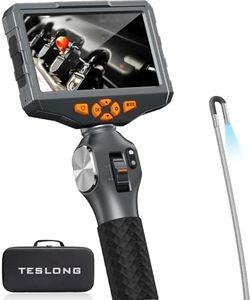
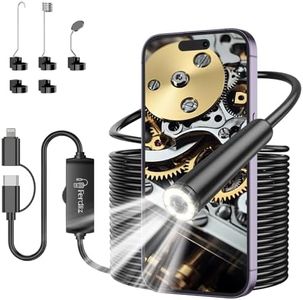
Related Products
Up to 27% off
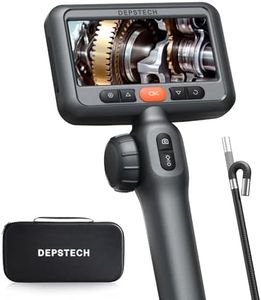
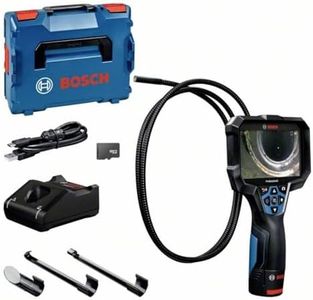
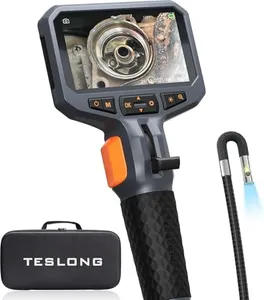
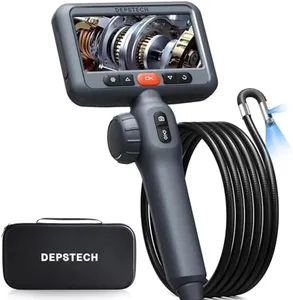
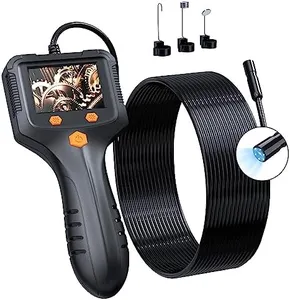

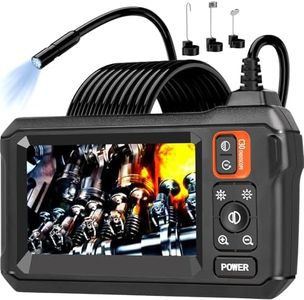
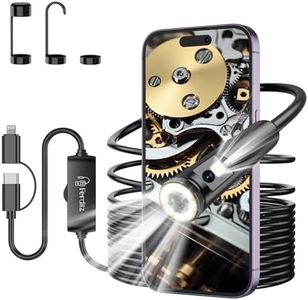

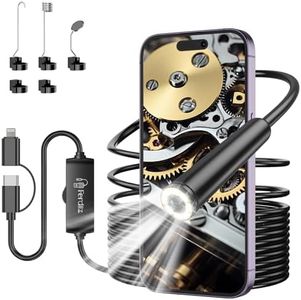
Recommended lists
Top rated
Scopes
Buying Guide for the Best Borescopes
Choosing the right borescope can be a bit overwhelming given the variety of options available. A borescope is a tool used to inspect areas that are otherwise inaccessible, such as inside engines, pipes, or walls. To make the best choice, you need to consider several key specifications that will determine how well the borescope meets your needs. Understanding these specifications will help you navigate through the options and select the one that fits your requirements perfectly.Camera ResolutionCamera resolution refers to the clarity and detail of the images captured by the borescope. Higher resolution cameras provide clearer and more detailed images, which is crucial for identifying issues in tight spaces. Resolutions can range from standard definition (SD) to high definition (HD) and even 4K. If you need to see fine details, such as small cracks or intricate components, opt for a higher resolution. For general inspections, a lower resolution may suffice.
Probe LengthThe probe length is the length of the flexible tube that houses the camera and light source. This determines how deep you can reach into the area you are inspecting. Probe lengths can vary from a few inches to several meters. If you need to inspect long pipes or deep cavities, choose a longer probe. For shorter or more confined spaces, a shorter probe will be easier to maneuver.
Diameter of the ProbeThe diameter of the probe is the thickness of the tube that needs to fit into the inspection area. Smaller diameters are ideal for tight spaces and small openings, while larger diameters may provide better durability and image quality. Consider the size of the openings you need to inspect; if they are very narrow, a smaller diameter probe will be necessary.
LightingLighting is crucial for visibility in dark or enclosed spaces. Borescopes typically come with built-in LED lights to illuminate the inspection area. The number and brightness of these lights can vary. More powerful lighting will provide better visibility, especially in very dark environments. If you are inspecting areas with little to no ambient light, opt for a borescope with strong, adjustable lighting.
ArticulationArticulation refers to the ability of the probe to bend and maneuver within the inspection area. Some borescopes have fixed probes, while others offer varying degrees of articulation, allowing you to change the direction of the camera. If you need to inspect around corners or navigate complex pathways, a borescope with good articulation will be very useful. For straightforward inspections, a fixed probe may be sufficient.
Display TypeThe display type is the screen where you view the images captured by the borescope. Displays can be built into the borescope or connected externally via a smartphone, tablet, or computer. Built-in displays are convenient and portable, while external displays can offer larger viewing areas and better resolution. Choose based on your preference for portability versus image size and quality.
Battery LifeBattery life determines how long you can use the borescope before needing to recharge. Longer battery life is important for extended inspections or when working in areas without easy access to power. If you plan to use the borescope for long periods or in remote locations, opt for a model with a longer battery life. For shorter, occasional use, battery life may be less critical.