10 Best Long Battery Life Smartwatch
From leading brands and best sellers available on the web.By clicking on a link to a third party's website, log data is shared with that third party.
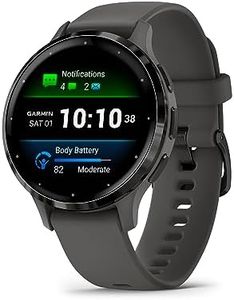
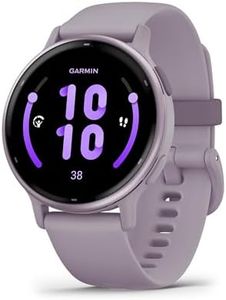
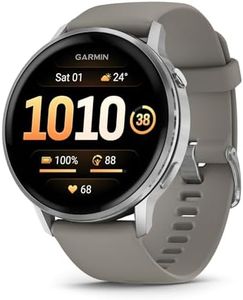
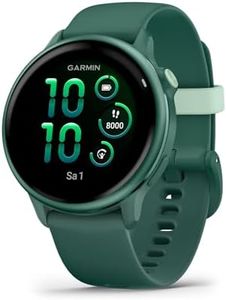
Related Products
Up to 24% off
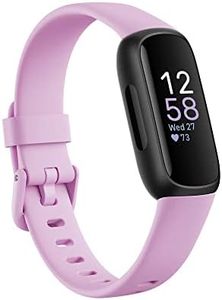
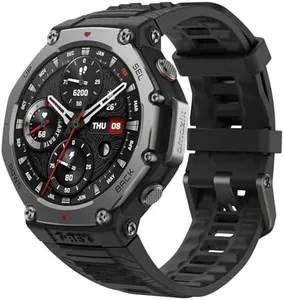

Buying Guide for the Best Long Battery Life Smartwatch
When choosing a smartwatch, one of the most important factors to consider is battery life. A smartwatch with a long battery life ensures that you can use it throughout the day without constantly worrying about recharging. To find the best smartwatch for your needs, it's essential to understand the key specifications that affect battery life and how they align with your lifestyle and usage patterns.Battery CapacityBattery capacity is measured in milliampere-hours (mAh) and indicates how much energy the battery can store. A higher mAh value generally means a longer battery life. However, the actual battery life also depends on the smartwatch's power consumption. If you use your smartwatch for basic functions like checking the time and notifications, a lower capacity might suffice. For more intensive use, such as GPS tracking or continuous heart rate monitoring, a higher capacity is preferable.
Display TypeThe type of display used in a smartwatch can significantly impact battery life. OLED and AMOLED displays are more energy-efficient than LCDs because they light up individual pixels rather than the entire screen. If you prioritize battery life, consider a smartwatch with an OLED or AMOLED display. However, if you prefer a brighter screen that is easier to read in direct sunlight, an LCD might be more suitable, though it may consume more power.
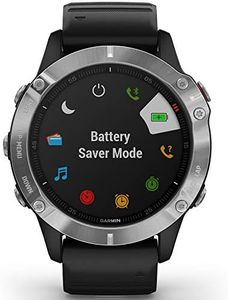
Power Management FeaturesSmartwatches often come with power management features like battery saver modes, which can extend battery life by limiting certain functions. These features are crucial if you need your smartwatch to last longer between charges. If you frequently find yourself away from a charger, look for a smartwatch with robust power management options that allow you to customize which features to disable to conserve battery.
Usage PatternsYour usage patterns greatly influence the battery life of a smartwatch. If you use GPS, stream music, or have many apps running, the battery will drain faster. Consider how you plan to use your smartwatch daily. If you need it primarily for notifications and timekeeping, a model with moderate battery life might be sufficient. For fitness tracking or outdoor activities, where GPS and sensors are used extensively, opt for a model known for longer battery life.
Charging TimeCharging time is how long it takes to fully charge the smartwatch's battery. A shorter charging time can be convenient, especially if you have a busy schedule. If you often forget to charge your devices, a smartwatch that charges quickly can be a lifesaver. Consider how often you can realistically charge your device and choose a model that aligns with your routine.