10 Best Sliding Mitre Saws
From leading brands and best sellers available on the web.By clicking on a link to a third party's website, log data is shared with that third party.
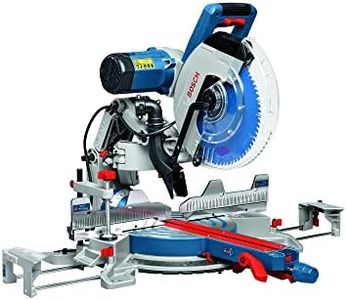

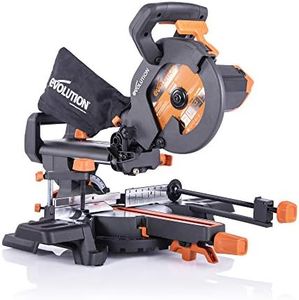
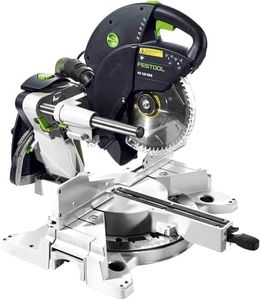
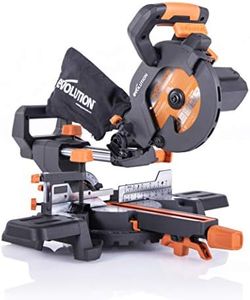
Related Products
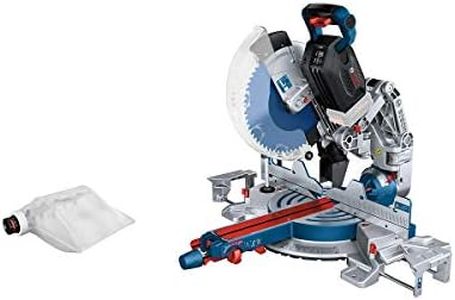
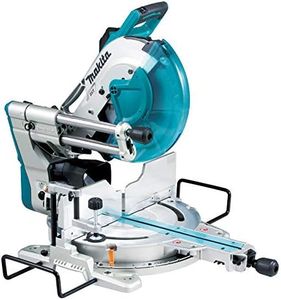
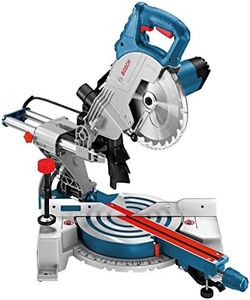
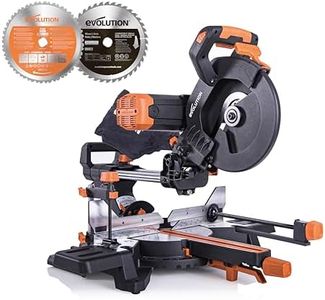
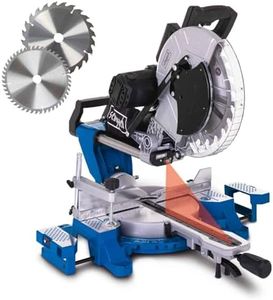
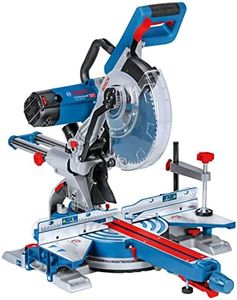

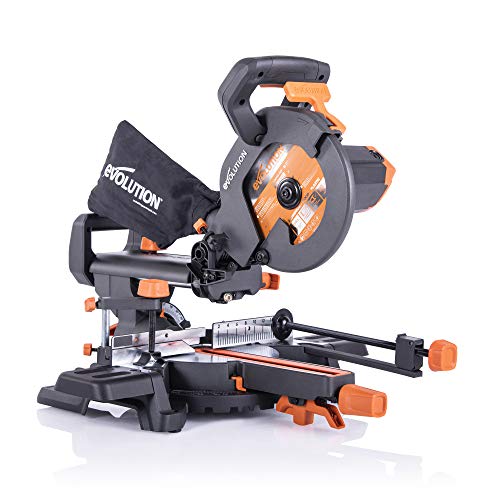
Buying Guide for the Best Sliding Mitre Saws
Choosing the right sliding mitre saw can make a significant difference in the quality and efficiency of your woodworking projects. These saws are designed to make precise crosscuts and mitre cuts in wood, and the sliding feature allows for cutting wider pieces. When selecting a sliding mitre saw, consider the types of projects you plan to undertake, the materials you'll be working with, and the space available in your workshop. Understanding the key specifications will help you make an informed decision that suits your needs.Blade SizeThe blade size of a sliding mitre saw determines the maximum width and depth of the cut it can make. Common blade sizes are 8, 10, and 12 inches. Larger blades can cut through thicker and wider materials, making them suitable for larger projects like framing or cutting large boards. Smaller blades are more compact and easier to handle, ideal for smaller, detailed work. Choose a blade size based on the scale of your projects and the types of materials you frequently work with.
Motor PowerMotor power, measured in amps, indicates the saw's ability to cut through materials. Higher power motors can handle tougher materials and make smoother cuts, which is crucial for heavy-duty tasks. Typically, motors range from 10 to 15 amps. If you plan to work with hardwoods or thicker materials, opt for a higher amp motor. For lighter, occasional use, a lower amp motor may suffice.
Sliding MechanismThe sliding mechanism allows the saw to move forward and backward, increasing the cutting capacity for wider boards. This feature is essential for cutting large pieces of wood, such as wide planks or beams. Consider the smoothness and ease of the sliding action, as well as the maximum width it can accommodate. If your projects involve wide materials, ensure the sliding mechanism is robust and reliable.
Mitre and Bevel RangeMitre and bevel ranges determine the angles at which the saw can cut. A wider range offers more versatility for complex cuts, such as crown molding or angled joints. Most saws offer 0 to 45 degrees for both mitre and bevel cuts, with some extending beyond. If your work involves intricate angles, look for a saw with a broad range and easy-to-adjust settings to ensure precision.
Dust CollectionDust collection systems help keep your workspace clean and reduce airborne particles, which is important for health and safety. Some saws come with built-in dust bags or ports for attaching a vacuum. Evaluate the efficiency of the dust collection system, especially if you work indoors or have a small workshop. A good dust collection system can significantly improve your working environment.
Safety FeaturesSafety features such as blade guards, electric brakes, and safety locks are crucial for preventing accidents. Blade guards protect you from direct contact with the blade, while electric brakes stop the blade quickly after the trigger is released. Safety locks prevent accidental starts. Prioritize saws with comprehensive safety features, especially if you're new to using power tools or if the saw will be used in a shared workspace.